
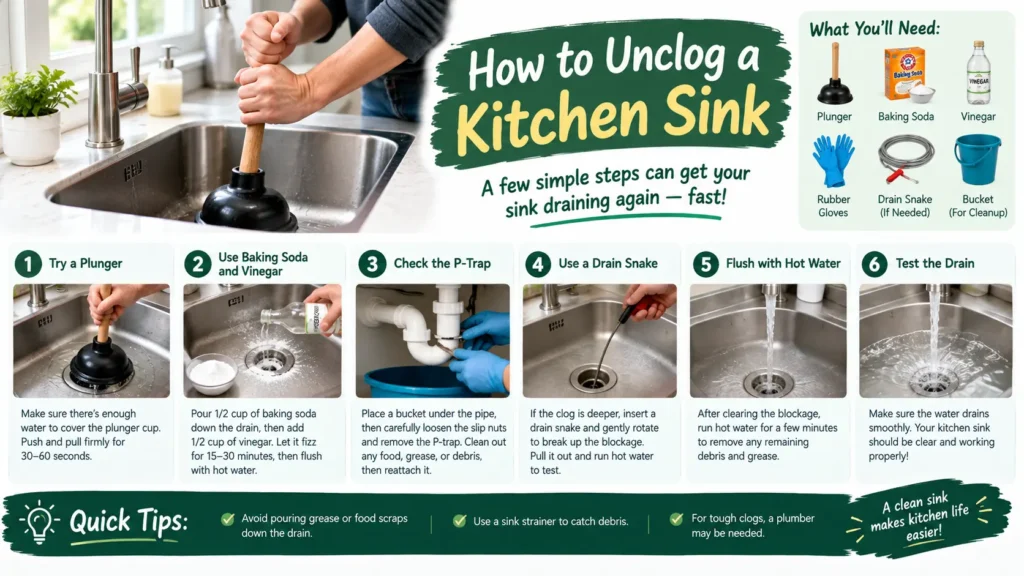
If you have been searching for how to unclog a kitchen sink, you have landed in exactly the right place. There I was, standing in front of a sink full of murky, standing water at 9 PM on a Sunday. Dishes piled high, a family dinner just wrapped, and the drain had completely given up on me. If that sounds familiar, keep reading because this guide covers everything you need.
Knowing how to unclog a kitchen sink is one of those life skills nobody teaches you until the moment you desperately need it. The good news? Most clogs are entirely fixable without calling a plumber.
According to data from Fixr, the national average cost to professionally unclog a kitchen sink runs between $250 and $400, with after-hours emergency calls pushing past $1,300. That is a lot of money for a problem you can often solve in under 30 minutes with items already in your home.
A 2025 consumer survey by Mr. Rooter Plumbing found that nearly 68% of Americans have experienced a plumbing issue during the holiday season at least once, and cooking grease, fats, and oils poured down the drain were identified as the single leading culprit by 33.5% of respondents. Whether it is Thanksgiving leftovers or an ordinary Tuesday evening, understanding how to unclog a kitchen sink puts the power back in your hands and the money back in your wallet.
Why Does Your Kitchen Sink Keep Clogging?
Before diving into solutions, it helps to understand what causes the problem. Knowing the root cause makes it much easier to figure out how to unclog a kitchen sink the right way, and to keep it clear for the long haul.
The Most Common Causes of Kitchen Drain Clogs
Your kitchen sink handles a surprisingly heavy workload every single day. Grease, soap scum, food particles, and constant water flow all conspire against you over time.
Here are the most frequent offenders:
- Grease and cooking oil: Hot grease pours down easily but solidifies inside pipes as it cools, coating the walls and trapping debris with every passing week.
- Food scraps: Rice, pasta, eggshells, and coffee grounds do not break down in drainpipes, even with a garbage disposal.
- Soap residue: Dish soap leaves a sticky film inside pipes that acts like a magnet for grease and food particles.
- Fibrous vegetables: Celery strings, asparagus, and artichoke leaves tangle around disposal blades and build blockages.
- Foreign objects: Bottle caps, rubber bands, small utensils, and children’s curiosity all find their way into drains.
As Joseph Wade, Vice President of Operations at Benjamin Franklin Plumbing, puts it: “Homeowners should avoid pouring grease down the drain. As it cools, it will solidify, potentially blocking the pipe.”
In homes over 30 years old, aging galvanized pipes can narrow and corrode from the inside, compounding the effect of everyday debris. If you are experiencing recurring clogs, your plumbing infrastructure itself may be part of the problem.
How to Unclog a Kitchen Sink: 6 Methods That Actually Work
Let us get into the practical part. Knowing how to unclog a kitchen sink means having a toolkit of approaches, starting with the simplest and building up to more intensive fixes.
Method 1: Boiling Water Your First Line of Defense
This is the easiest approach for how to unclog a kitchen sink and the smartest first step, especially for soft blockages caused by grease or soap buildup.
What you need: A kettle or large pot
How to do it:
- Boil a full kettle of water.
- Slowly pour it directly down the drain in two or three stages, pausing 30 seconds between each pour.
- Run hot tap water for 60 seconds to flush residue.
Pro tip: Do not use boiling water on PVC pipes. Extreme heat can soften or warp plastic. Use very hot tap water instead if you have PVC plumbing.
Method 2: Baking Soda and Vinegar The Classic Fizz Fix
If you want to know how to unclog a kitchen sink with natural ingredients you already own, this is your answer. It is cheap, effective, and completely safe for all common pipe types.
What you need: 1/3 cup baking soda, 1/3 cup white vinegar, hot water
How to do it:
- Remove any standing water from the sink basin.
- Pour 1/3 cup of baking soda directly into the drain.
- Immediately follow with 1/3 cup of white vinegar.
- Cover the drain with a stopper or damp rag to force the fizzing action downward into the pipe.
- Let it sit for 15 to 20 minutes.
- Flush with a pot of very hot (not boiling) water.
The chemical reaction creates carbon dioxide bubbles that help break apart soft clogs. It is one of the most popular DIY methods for how to unclog a kitchen sink because the ingredients are almost always on hand.
Method 3: The Plunger More Powerful Than You Think
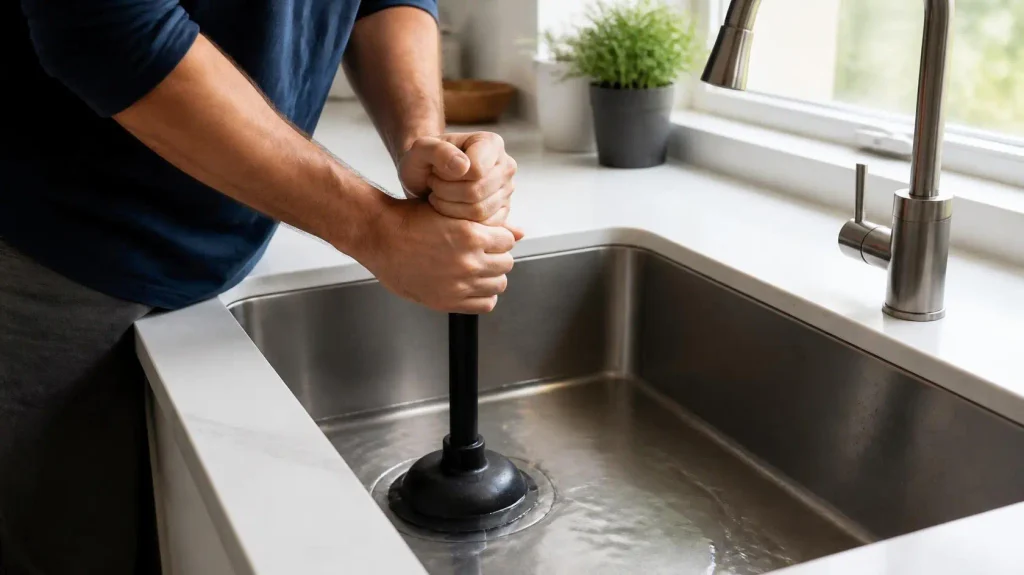
Most people reach for a plunger only when a toilet fails them, but it is genuinely one of the most effective tools for how to unclog a kitchen sink. A cup plunger (flat-bottomed, not the flanged toilet style) works best here.
How to do it:
- If you have a double sink, seal the second drain with a wet rag to maximize suction.
- Add enough water to the clogged sink to submerge the plunger cup.
- Position the plunger over the drain and push down firmly, then pull up sharply. Repeat 10 to 15 times in quick succession.
- Remove the plunger and check whether the water drains.
For stubborn clogs, run the baking soda and vinegar treatment first, wait 20 minutes, then plunge.
Method 4: Clean the P-Trap Under the Sink
If boiling water, baking soda, and plunging have not solved the problem, the clog is likely sitting in the P-trap. This is the curved section of pipe directly beneath your sink, shaped like the letter P or U. It is designed to hold a small water seal that blocks sewer gases but it is also a prime location for debris to collect.
What you need: Adjustable pliers, a bucket, rubber gloves, old towels
How to do it:
- Clear out the cabinet under the sink and position a bucket beneath the P-trap.
- Use pliers or your hands to unscrew the two slip nuts holding the trap in place.
- Carefully remove the trap and let the trapped water and debris fall into the bucket.
- Use a small brush or straightened coat hanger to clear debris from inside the trap.
- Rinse the trap thoroughly, reinstall it, and hand-tighten the slip nuts.
- Run water to test for leaks.
The amount of buildup found inside a neglected P-trap can be genuinely alarming and cleaning it out is often all it takes.
Method 5: Drain Snake or Hand Auger
When the P-trap is clear but water still pools, the blockage is deeper in the pipe. This is when a drain snake becomes the right tool for how to unclog a kitchen sink in more serious cases.
A basic manual drain snake costs $20 to $30 at any hardware store. It is a flexible cable with a coiled end that you feed into the pipe to break up or retrieve clogs.
How to use it:
- Feed the cable into the drain opening.
- Crank the handle clockwise while pushing it further into the pipe.
- When you feel resistance, continue cranking to break through or snag the clog.
- Slowly pull the snake back, rotating as you go.
- Run hot water to flush loosened debris.
Electric snakes can be rented from hardware stores for around $40 to $60 per day and offer significantly more power and reach for deep blockages.
Method 6: Chemical Drain Cleaners Use With Care
Chemical cleaners like Drano or Liquid-Plumr can work for how to unclog a kitchen sink, but they carry real tradeoffs. These products contain lye or sulfuric acid that dissolves organic material. Prolonged use can corrode metal pipes, damage PVC fittings, and create hazardous splashing if combined with a plunger.
When to use them: Only as a last DIY resort, in a well-ventilated space, with rubber gloves and eye protection.
Skip them entirely if:
- You have already used a plunger (splashback risk)
- Your pipes are older metal or fragile PVC
- You are dealing with a complete blockage (the chemical just sits in the pipe and causes damage)
DIY vs Professional Cost Comparison
Not sure which approach to take first? This breakdown helps you decide before reaching for your phone or your wallet.
| Method | Difficulty | Cost | Best For |
|---|---|---|---|
| Boiling Water | Very Easy | $0 | Soft grease / soap clogs |
| Baking Soda + Vinegar | Easy | $0 | Early-stage buildup |
| Plunger | Easy | $10–$20 | Partial blockages |
| P-Trap Cleaning | Moderate | $0 | Under-sink debris |
| Drain Snake | Moderate | $20–$60 | Deep pipe clogs |
| Chemical Cleaner | Easy | $8–$15 | Organic clogs (use carefully) |
| Professional Plumber | N/A | $250–$400 | Severe or recurring clogs |
As a general rule, if you have worked through three or more of these methods and water still refuses to drain, it is time to call a licensed plumber.
How to Prevent a Clogged Kitchen Sink for Good
Understanding how to unclog a kitchen sink is valuable. Understanding how to prevent one is even better. A few consistent habits eliminate the majority of clogs before they form.
Prevention Habits That Make a Real Difference
Install a sink strainer. This $5 to $15 purchase catches food particles before they enter the drain. Empty it after every use. It is the single highest-return investment in your kitchen plumbing.
Never pour grease down the drain. Let cooking oil and bacon grease cool and solidify in a jar, then throw it in the trash. This one habit prevents a disproportionate number of kitchen clogs.
Run hot water before and after using the disposal. Hot water keeps grease in liquid form while it passes through the pipe. Run the tap for 30 seconds before grinding, and let it continue 30 seconds after you switch the disposal off.
Flush the drain weekly. Pour a pot of very hot water down the drain once a week, followed by a squeeze of dish soap. This routine prevents gradual buildup before it becomes a clog worth worrying about.
Avoid putting these items down the drain:
- Coffee grounds
- Eggshells
- Pasta, rice, and bread (they expand with water)
- Potato peels and fibrous vegetables
- Paper products of any kind
Every homeowner who masters how to unclog a kitchen sink quickly realizes prevention is even simpler than the fix. For more expert guidance on kitchen maintenance and home improvement, Homes Remodeler offers practical resources for every level of DIY homeowner.
When to Call a Plumber Red Flags to Watch For
DIY methods handle the vast majority of cases when you are figuring out how to unclog a kitchen sink, but sometimes the problem sits beyond the reach of any household tool. Here are the signs that professional help is the right call:
- Multiple drains back up at the same time. This points to a main sewer line clog, not a kitchen branch issue.
- Gurgling sounds come from other fixtures when you run the kitchen sink.
- Water backs up into the dishwasher or a nearby appliance connected to the same line.
- You smell sewage. This indicates a blockage deep enough to push sewer gases backward into your home.
- The clog returns within days of clearing it. Recurring issues almost always signal a structural plumbing problem.
Professional drain cleaning ranges from $147 to $346 based on 2025 HomeAdvisor data, with a national average of around $242 for standard service. Emergency calls can exceed $1,300 which is powerful motivation to tackle slow drains before they become complete blockages.
Mike Henderson, Vice President of Operations for Mr. Rooter Plumbing, frames it perfectly: “When homeowners understand what’s happening in their pipes, especially during a peak usage period, they are better equipped to avoid damage and extend the life of their plumbing systems.”
Quick Reference: How to Unclog a Kitchen Sink Step by Step
If you are short on time and need to know how to unclog a kitchen sink right now, follow this sequence:
- Start with boiling or very hot water takes 5 minutes, costs nothing.
- If water pools, move to baking soda and vinegar takes 25 minutes, still free.
- If the clog remains, plunge firmly for 2 to 3 minutes.
- Clean the P-trap under the sink.
- Feed a drain snake down the pipe for deeper blockages.
- As a last DIY step, use a chemical drain cleaner with appropriate safety measures.
- If none of the above resolves the issue, call a licensed plumber.
One last thing to remember when learning how to unclog a kitchen sink: patience pays off. Mastering how to unclog a kitchen sink is ultimately about working through these steps systematically rather than panicking and jumping straight to a $300 service call.
Frequently Asked Questions
What is the fastest way to unclog a kitchen sink at home?
Start with very hot water, poured slowly down the drain. If that does not clear the blockage, try a plunger or another appropriate drain-clearing method. For grease-related clogs, these simple approaches may help loosen the buildup.
Can I use Drano if I have a garbage disposal?
It is generally better to avoid chemical drain cleaners with garbage disposals unless the product specifically states that it is safe for that system. A plunger or drain snake is usually a better first option. Always follow the disposal and drain-cleaner manufacturer’s instructions.
Why does my kitchen sink keep clogging even after I fix it?
Recurring clogs can indicate deeper buildup, a partially blocked drain line, poor drainage, or damaged pipes. If the sink repeatedly becomes clogged despite cleaning it, consider having a plumber inspect the drain system rather than repeatedly treating the symptoms.
Is the baking soda and vinegar method safe to use regularly?
Baking soda and vinegar are commonly used as a mild household drain-cleaning method, but they are not a guaranteed solution for stubborn clogs. For routine maintenance, preventing grease, food scraps, and other debris from entering the drain is generally more useful.
How do I know if the clog is in my sink or the main sewer line?
If only the kitchen sink is slow or backing up, the blockage is more likely to be local. If multiple fixtures throughout the home are backing up or draining slowly at the same time, the problem may involve a larger drain or sewer line. In that situation, professional inspection is recommended.