Let me be honest with you the first time I truly committed to learning how to deep clean bathroom spaces properly, I was embarrassed by what I found behind the toilet. And I thought I had been cleaning it all along.
The reality is, most of us wipe surfaces and call it done. But a real deep clean is something else entirely. It is the kind of session that reaches grout lines, drains, vent fans, and the creases behind faucet handles that have never seen a sponge.
According to a 2026 survey by ECOVACS, only about 7.4% of Americans clean their bathroom once a month or less which means a significant chunk of households are long overdue for a proper session. And when you consider that shower curtains can harbor over 16.2 million colony-forming units (CFU) compared to just 235,000 on a toilet seat, the stakes for knowing how to deep clean bathroom areas correctly could not be higher.
This guide will walk you through everything from the supplies you need to the exact order professionals follow so you can learn how to deep clean bathroom spaces efficiently, safely, and thoroughly.
Why Knowing How to Deep Clean Bathroom Is Non-Negotiable
Many people underestimate just how contaminated their bathrooms can become between cleanings. The American Cleaning Institute’s 2024 National Cleaning Survey found that 38% of Americans say cleaning bathrooms is among their most dreaded household tasks and yet the same survey confirms bathrooms are among the most germ-dense rooms in the home.
Beyond the obvious hygiene benefits, knowing how to deep clean bathroom spaces properly protects your family from mold, mildew, and bacteria that thrive in warm, damp environments. According to Gitnux’s 2025 home cleaning statistics, bathroom cleaning bleach treatments can reduce bacteria counts by up to 99.9%, making method and product choice critically important.
Whether you are tackling a weekly touch-up or preparing for a seasonal overhaul, this guide gives you the structure to do it right every time.
Supplies You Need Before You Deep Clean Bathroom Spaces
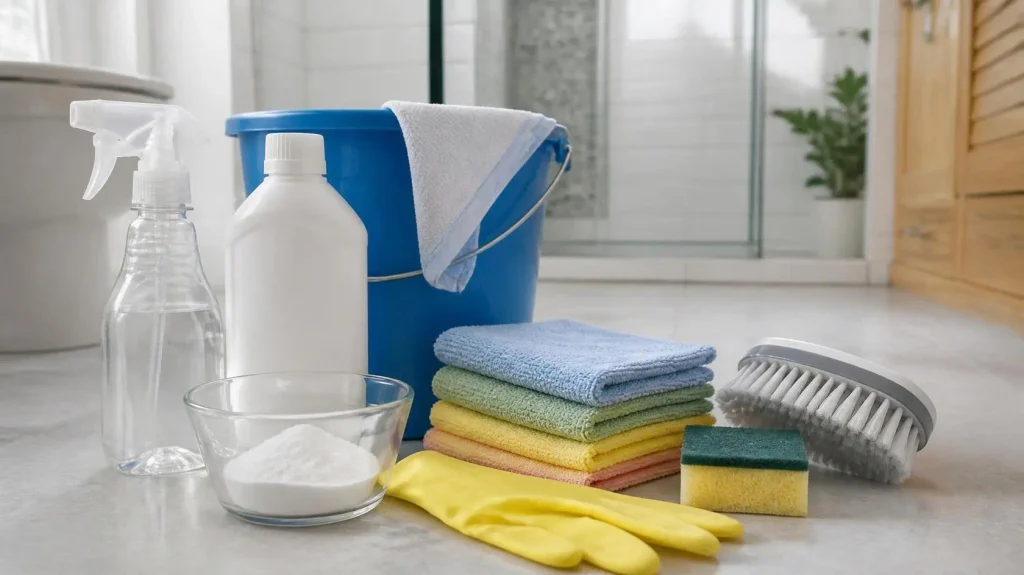
Before you begin, gather everything. Starting mid-clean to hunt for a brush wastes time and momentum. Here is what professionals recommend:
- Microfiber cloths (at least four one per zone)
- Toilet brush and a handled scrubber
- Grout brush or old toothbrush
- Spray disinfectant (bleach-based or EPA-registered)
- White distilled vinegar
- Baking soda
- Dish soap
- Glass cleaner
- Rubber gloves
- A bucket and mop or spray mop
- Zip-it drain tool or drain snake
Pro tip: Never mix bleach with ammonia or hydrogen peroxide the combination produces toxic fumes. Lay out your products in order of use before you start.
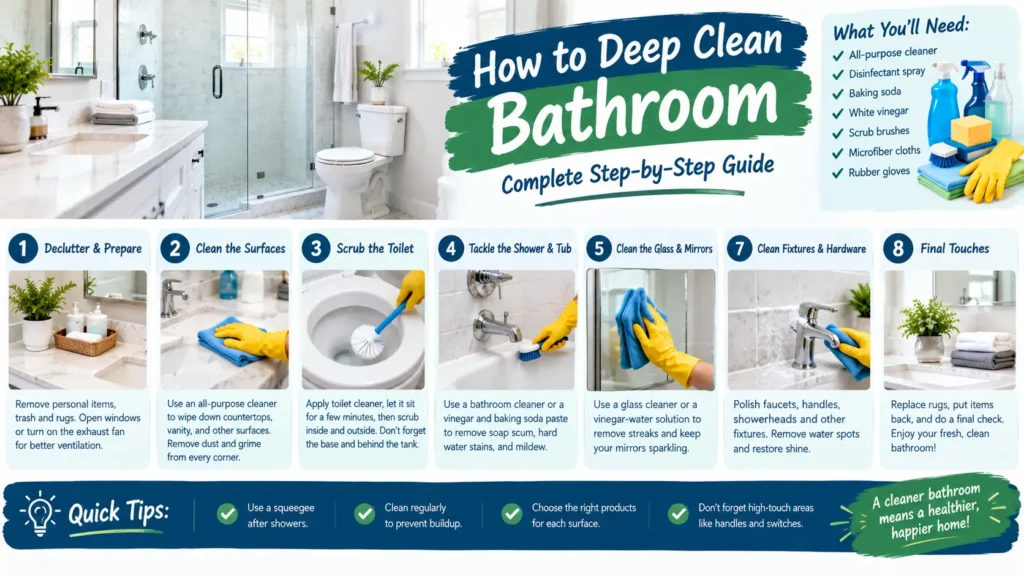
The Complete Step by Step: How to Deep Clean Bathroom Like a Pro
Step 1: Declutter and Strip the Room First
The most overlooked first step when learning how to deep clean bathroom spaces is to remove everything before you touch a single product. Pull out all towels, bathmats, and shower curtains and send them directly to the washing machine. Clear every surface soap dispensers, razors, shampoo bottles, candles, all of it.
This is the step that separates a deep clean from a surface wipe. You cannot clean what you cannot reach, and clutter hides the grimiest spots.
Step 2: Start from the Top Vents and Ceiling
Always clean top to bottom. That way, dust and debris from upper surfaces fall onto areas you have not cleaned yet. Begin with the exhaust fan vent, which is one of the most bacteria-harboring spots in any bathroom. Use a vacuum attachment or compressed air to clear dust buildup, then wipe the cover with a damp microfiber cloth.
Wipe down light fixtures, ceiling corners, and any shelving mounted high on the wall.
Step 3: Apply Disinfectant Let It Dwell
One of the most important techniques in how to deep clean bathroom properly is dwell time. Spray your disinfectant on the toilet bowl, shower walls, tub, and sink basin then walk away for five to ten minutes. Most disinfectants need contact time to actually kill bacteria, not just move them around.
Apply a dedicated toilet bowl cleaner under the rim and let it sit. While it works, you move on to the next step, saving significant time.
Step 4: Scrub the Shower and Tub
This is where most of the effort lives when you deep clean bathroom spaces. The shower floor averages 15.8 million colony-forming units, making it one of the germiest surfaces in your entire home far worse than the toilet.
Follow this sequence:
- Scrub tile walls using a microfiber cloth and all-purpose cleaner
- Attack grout lines with a grout brush dipped in a baking soda paste or straight white vinegar
- For glass shower doors, apply a mixture of white vinegar, a drop of dish soap, and warm water let it sit for 30 minutes, then wipe clean
- Scrub the tub basin in circular motions, paying extra attention to the drain area and overflow plate
- For the showerhead, fill a plastic bag with undiluted white vinegar, seal it around the head with a rubber band, and let it soak for at least 30 minutes to dissolve mineral deposits
Step 5: Tackle the Toilet Inside and Out
When people talk about how to deep clean bathroom toilets, they almost always focus on the bowl and forget the exterior. Professional cleaners treat the toilet as five surfaces: the bowl, under the rim, the seat (both sides), the lid, the tank, and the base.
Scrub inside the bowl thoroughly with a toilet brush, getting under the rim where bacteria accumulate unseen. Then wipe every exterior surface with a disinfectant cloth and do not skip the base, the hinge screws, and the underside of the seat.
Remove the toilet seat entirely at least once every few months to clean the hinge area, where buildup causes odors even in “clean” bathrooms.
Step 6: Clean the Sink and Vanity Area
When you deep clean bathroom sinks, detail work matters. Grime collects around the faucet base, the drain, and inside the overflow hole. Use a small brush an old toothbrush works perfectly to get into those crevices.
Disinfect the countertop surface, and clean the mirror last in this zone. Spray glass cleaner onto a microfiber cloth (not directly onto the mirror) and wipe in an S-pattern from top to bottom to avoid streaks.
Step 7: Clear Drains of Hair and Buildup
Blocked drains are a hygiene issue, not just a plumbing one. Use a zip-it drain tool to physically remove hair clogs from the shower and sink drains. Follow up with a flush of baking soda and white vinegar to deodorize and dissolve remaining debris.
This step is rarely included in casual guides on how to deep clean bathroom spaces, but it is one of the most impactful for preventing long-term odor and mold issues.
Step 8: Clean Floors Last
The floor collects everything from above during your clean hair, drips, cleaning product residue, dust. Vacuum or sweep thoroughly first, paying close attention to corners and the space behind and beneath the toilet.
Then mop using a solution appropriate for your flooring type. Start at the farthest corner from the door and work backward. Let the floor dry completely before walking in.
Cleaning Frequency Guide: How Often to Deep Clean Bathroom Areas
Knowing how to deep clean bathroom spaces is only useful if you apply it with the right frequency. Here is a breakdown:
| Area | Recommended Frequency |
|---|---|
| Toilet bowl | Weekly |
| Sink and countertop | Weekly |
| Shower walls and tub | Weekly to bi-weekly |
| Grout lines | Monthly |
| Mirrors | Weekly |
| Exhaust fan vent | Every 1–3 months |
| Showerhead descale | Every 1–2 months |
| Toilet seat removal clean | Every 2–3 months |
| Full deep clean session | Monthly |
According to Gitnux’s 2026 data, bathroom cleaning consumes 20% of total weekly house cleaning time for the average American a meaningful chunk that justifies doing it efficiently and correctly.
Natural vs Chemical Cleaners: What Works Best When You Deep Clean Bathroom
| Situation | Best Product |
|---|---|
| Soap scum on glass | White vinegar + dish soap |
| Grout stains | Baking soda paste or bleach gel |
| Mineral deposits on fixtures | Undiluted white vinegar |
| General disinfection | EPA-registered disinfectant or bleach solution |
| Toilet bowl stains | Toilet bowl cleaner with hydrochloric acid |
| Odor elimination | Baking soda + vinegar flush |
For a well-rounded resource on bathroom updates that can make cleaning easier long-term, Homes Remodeler covers practical renovation tips that pair well with a proper cleaning routine.
Common Mistakes People Make When Learning How to Deep Clean Bathroom
Even with the best intentions, these errors consistently undermine results:
1. Cleaning wet surfaces before dry dusting If you spray and wipe before dusting, you push dust into the moisture and smear it. Always dust dry first.
2. Not allowing dwell time for disinfectants Wiping immediately after spraying removes the product before it can work. Most disinfectants need at least five minutes of contact time to be effective.
3. Using one cloth for all surfaces Cross-contamination is a real risk. Designate separate microfiber cloths for the toilet, sink, and shower.
4. Forgetting hidden zones The underside of the toilet rim, the faucet overflow hole, behind the toilet tank, and inside the toothbrush holder are consistently missed.
5. Mixing cleaning chemicals According to a 2024 consumer survey, 55% of Americans admit to mixing cleaning products, creating potentially dangerous chemical combinations. Never mix bleach with vinegar or ammonia.
Pro Tips to Make Your Next Deep Clean Bathroom Session Faster
- Multitask with dwell time. Apply toilet bowl cleaner first. While it works, clean the shower. When the shower is done, come back to scrub the bowl. You save 15–20 minutes per session.
- Keep a small spray bottle of daily shower spray in the bathroom to spritz surfaces after every use it dramatically reduces buildup between deep cleans.
- Seal your grout every six months. Grout is porous and absorbs bacteria readily. Sealing prevents infiltration and cuts scrubbing time significantly.
- Use a squeegee on shower walls after every shower. This single habit reduces soap scum accumulation by a noticeable margin.
- Steam the shower before you scrub. Run hot water for five minutes with cleaner applied, then shut the door and let steam work for 20 minutes. The heat loosens grime without extra effort.
According to Apartment Therapy, a vinegar and dish soap solution applied to glass shower doors for 30 minutes before wiping is one of the most effective DIY solutions for soap scum, rivaling commercial products.
How Long Does It Take to Deep Clean Bathroom Spaces?
A first deep clean bathroom session especially if it has been neglected can take one and a half to two hours. Once you have a regular routine in place, that time typically drops to 45 to 90 minutes, as per professional cleaning data.
For a 2,000 sq ft home, professional cleaners estimate a full deep clean of all rooms takes 8 to 10 hours manually. The bathroom consistently ranks as the most time-intensive room per square foot, which is exactly why a structured approach pays off.
FAQ: How to Deep Clean Bathroom
How often should I do a full deep clean bathroom session?
A thorough bathroom deep clean is generally useful about once a month, with lighter cleaning performed weekly. Bathrooms used by several people may need more frequent deep cleaning depending on moisture, traffic, and buildup.
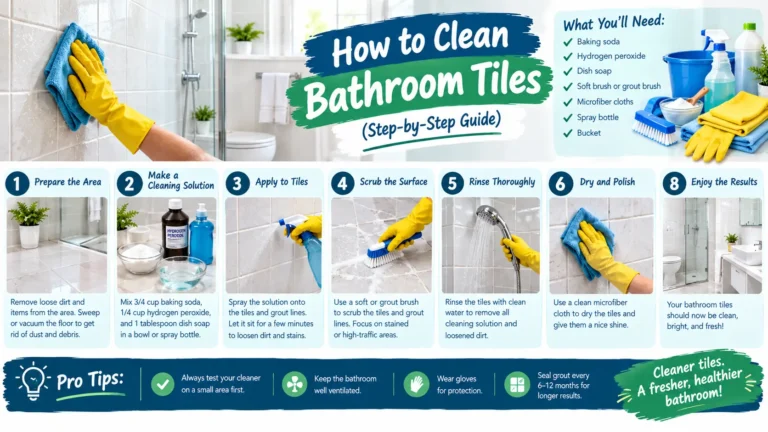
What is the best homemade solution to deep clean bathroom tile and grout?
For routine tile and grout cleaning, a baking soda and water paste can help loosen grime when applied with a grout brush. Avoid mixing vinegar with bleach or other chemical cleaners, as some combinations can release dangerous fumes. For stubborn or damaged grout, use a product specifically labeled for the surface.
How do I deep clean bathroom surfaces without harsh chemicals?
For routine cleaning, mild soap, water, baking soda, or appropriately diluted white vinegar can work for certain surfaces. However, vinegar is acidic and should not be used on every bathroom material, including some natural stones. Always check the manufacturer’s cleaning recommendations for the surface.
Can I deep clean bathroom drains myself?
Yes. A zip-it drain tool or similar physical tool can help remove accessible hair and debris. For recurring or severe clogs, avoid repeatedly using chemical drain cleaners and consider having the drain professionally inspected.
What is the correct order to deep clean bathroom spaces to avoid re-cleaning?
Use a top-to-bottom approach: clean vents and higher surfaces first, then walls and fixtures, followed by the toilet and sink, and finish with the floor. Cleaning dry areas before wet areas and leaving the floor until last helps prevent dirt and cleaning solution from getting onto surfaces you’ve already cleaned.