Let me be honest with you the first time I stood in front of my grimy shower wall wondering how to clean bathroom tiles the right way, I almost gave up before I started. The grout was dark, the tiles were streaky, and I had no idea where to begin. Sound familiar?
You are not alone. According to the American Cleaning Institute’s 2025 National Cleaning Survey, 97% of Americans agree that cleaning and hygiene are critical to public health yet 52% rank the bathroom as their most dreaded cleaning task. That is a huge gap between intention and action. But here is the good news: once you understand how to clean bathroom tiles correctly, it stops feeling overwhelming and starts feeling satisfying.
This guide will walk you through everything from daily spritz routines to deep-clean grout rescues so your tiles look fresh every single day.
Why Learning How to Clean Bathroom Tiles Actually Matters
Most people think dirty bathroom tiles are just an eyesore. But the reality runs deeper literally. Grout is porous, which means it absorbs moisture, soap residue, and bacteria. The pink slime you sometimes notice in your shower corners? That is Serratia marcescens, a bacteria that thrives in damp bathroom environments.
According to data cited by Gitnux (2025), proper bathroom cleaning with bleach-based products can reduce bacteria by 99.9%. Meanwhile, the National Environmental Health Association reports that 83% of bathrooms are cleaned weekly but only 15% receive daily attention. That weekly window is often enough time for mold and mildew to take hold between sessions.
If you are serious about a healthy home, knowing how to clean bathroom tiles is not optional. It is essential.
What You Need Before You Start Cleaning Bathroom Tiles
Before diving into the step-by-step process of how to clean bathroom tiles, gathering the right supplies makes a massive difference. Walking back and forth to the cabinet mid-clean wastes time and breaks your momentum.
Essential Supplies:
- Rubber gloves (protect your hands from cleaning agents)
- Stiff-bristle grout brush or old toothbrush
- Microfiber cloths (two one for scrubbing, one for drying)
- Spray bottle
- Soft sponge or non-abrasive scrub pad
- Bucket of warm water
Cleaning Solutions to Choose From:
| Solution | Best For | Strength |
|---|---|---|
| Baking soda + water paste | Light everyday grime | Mild |
| White vinegar spray | Soap scum and mineral deposits | Moderate |
| Hydrogen peroxide + baking soda | Stained grout and mildew | Strong |
| Commercial grout cleaner (e.g. Zep) | Heavily discoloured grout | Very Strong |
| Bleach-based cleaner (e.g. Clorox) | Mold and deep disinfection | Maximum |
Personal insight: I keep a small spray bottle under my bathroom sink filled with diluted white vinegar. A quick spritz after every shower literally changed how often I need to deep clean my tiles. Small habits, big results.
How to Clean Bathroom Tiles Step by Step
Ready to roll? Here is the most effective method for how to clean bathroom tiles from start to finish. Whether you are tackling a shower wall, floor tiles, or around the tub, this process works.
Step 1 — Clear the Space and Ventilate
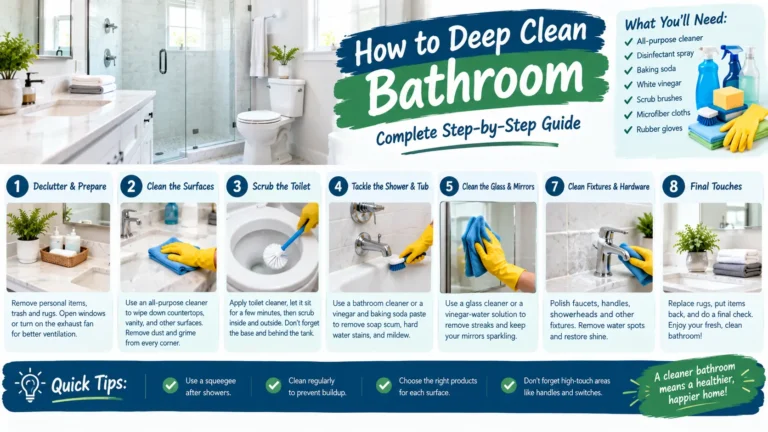
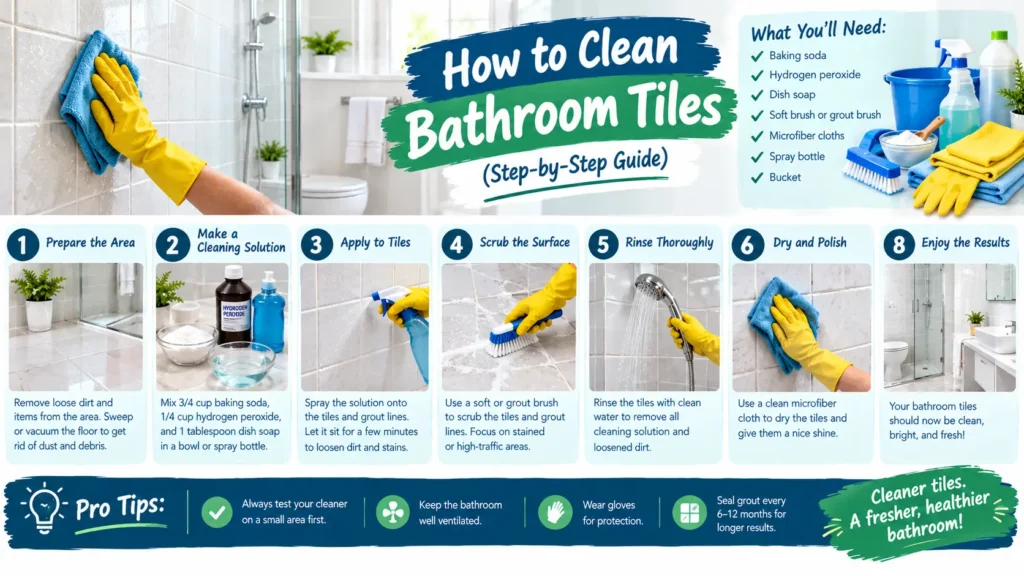
Remove shampoo bottles, soap dishes, and any accessories from the tile area. Open a window or switch on the exhaust fan. Ventilation is critical when using any cleaning product even natural ones like vinegar can irritate your throat in an enclosed space.
Step 2 — Start With the Grout First
This tip changed everything for me: always tackle the grout before the tiles. Cleaning expert guidance consistently recommends starting here because grime and rinse water from the grout will run down onto freshly cleaned tiles undoing your hard work.
Apply your chosen grout cleaner directly to the grout lines. Let it sit for 5 to 10 minutes so it can break down built-up soap scum, mildew, and staining.
Step 3 — Scrub the Grout Lines
Using a stiff toothbrush or dedicated grout brush, scrub in short back-and-forth strokes along each grout line. Do not scrub in circles linear strokes pull the grime out more efficiently.
For stubborn stains, try this trusted DIY mix: 3/4 cup baking soda + 1/4 cup hydrogen peroxide + 1 tablespoon mild dish soap, as recommended by The Home Depot’s cleaning guide. Apply the paste, let it sit, then scrub. The results are genuinely impressive.
Step 4 — Clean the Tile Surface
Once the grout is done, spray your tile cleaner onto the tile faces themselves. A soft sponge or microfiber cloth works best here abrasive pads can scratch glazed tiles over time. Work in sections from top to bottom so dirty water does not drip onto areas you have already cleaned.
For ceramic and porcelain tiles, a simple mix of warm water and mild dish soap handles routine grime beautifully. For natural stone tiles (marble, travertine), avoid anything acidic skip the vinegar and stick to a pH-neutral stone cleaner.
Step 5 — Rinse Thoroughly
This step is skipped far too often. Any cleaning residue left on tiles dulls their surface and attracts new dirt faster. Use a handheld shower head or a bucket of clean warm water to rinse everything down. For floor tiles, mop with clean water.
Step 6 — Dry the Tiles and Grout
Grab a dry microfiber cloth and wipe down the tile surfaces. This prevents water spots and crucially stops moisture from sitting in your grout, which is the number one trigger for mold regrowth.
How to Clean Bathroom Tiles Naturally (Eco-Friendly Methods)
More homeowners are reaching for natural cleaners and rightfully so. 67% of U.S. consumers spent more on cleaning products in 2023 versus 2022, partly driven by a growing awareness of what goes into the products we use daily, according to Gitnux.
Here are the best natural approaches for how to clean bathroom tiles without harsh chemicals:
Baking Soda Paste Method
Mix two parts baking soda with one part water to form a thick paste. Apply directly to tile and grout, let sit for 5–10 minutes, then scrub with a toothbrush and rinse. According to guidance from Duravit, baking soda is one of the most reliable, eco-friendly, and affordable options available for cleaning bathroom grout.
White Vinegar Spray Method
Fill a spray bottle with undiluted white vinegar. Spray generously onto tiles and let sit for a few minutes. Vinegar’s mild acidity cuts through soap scum and mineral build-up brilliantly. Rinse well afterward.
Important: Do NOT use vinegar on natural stone tiles. The acidity etches marble, travertine, and limestone permanently.
Lemon Juice for Rust Stains
Got rust spots near fixtures? Squeeze half a lemon, add a pinch of salt, and rub the mixture onto the rust stain. The citric acid forms iron citrate, which dissolves rust particles and makes them easy to wipe away.
Oxygen Bleach (OxiClean) for Deep Grout
Mix OxiClean powder with hot water and apply to grout lines. Let it dry, then go over with a steam cleaner and a bristle brush attachment. This combination is widely regarded as one of the most effective natural deep-cleaning methods for bathroom tiles.
Common Bathroom Tile Cleaning Mistakes to Avoid
Knowing how to clean bathroom tiles also means knowing what NOT to do. These are the errors that damage tiles, discolour grout, or make future cleaning harder.
- Using steel wool or abrasive scrubbers on glazed tiles — these leave micro-scratches that attract grime
- Applying vinegar to natural stone — permanently damages the surface
- Skipping rinsing — cleaning product residue dulls tile over time
- Letting cleaning products dry on the surface — especially bleach-based products, which can bleach colour from grout
- Ignoring grout sealing — unsealed grout absorbs stains rapidly; sealing once or twice a year makes an enormous difference to how long a clean lasts
Cleaning expert Erica Young, writing for Taste of Home (2024), emphasises that the best way to keep grout clean long-term is to seal it regularly unless you have epoxy grout, which is naturally stain-resistant.
How Often Should You Clean Bathroom Tiles?
Creating a routine is everything. Here is a simple framework based on cleaning frequency data:
| Task | Recommended Frequency |
|---|---|
| Quick spray wipe-down of tile surfaces | Daily or after each shower |
| Full tile scrub with cleaner | Weekly |
| Grout deep clean | Monthly |
| Apply grout sealer | Every 6–12 months |
The “little and often” philosophy, championed by cleaning professionals, genuinely prevents the buildup that turns a 10-minute weekly task into a 3-hour Saturday ordeal. If you want to keep your bathroom looking showroom-ready, consistent small efforts win every time.
Professional Cleaning vs DIY: Which Is Better?
Most tile cleaning can and should be handled yourself but there are moments when professional help pays off. If you are looking for inspiration for a deeper renovation alongside your tile refresh, the team at Homes Remodeler has a wide range of guides on bathroom upgrades that go beautifully alongside a proper tile clean.
For most households, DIY is completely sufficient. 45% of millennials now hire professional cleaners weekly (Gitnux, 2025), but for tile maintenance specifically, regular DIY care outperforms infrequent professional visits every time. The key is consistency, not intensity.
How to Clean Bathroom Tiles in a Shower vs Floor
Not all tiles face the same challenges. Here is a quick breakdown of how the approach differs by location:
Shower Wall Tiles
Shower tiles battle soap scum, hard water mineral deposits, and constant moisture. The grout is especially vulnerable to pink mold and black mildew. For shower tiles, a weekly vinegar spray plus a monthly baking soda + hydrogen peroxide grout scrub is the gold standard. For an in-depth look at shower-specific grout cleaning, HGTV recommends an oxygen-based bleach and washing soda paste as a powerful eco-friendly solution.
Bathroom Floor Tiles
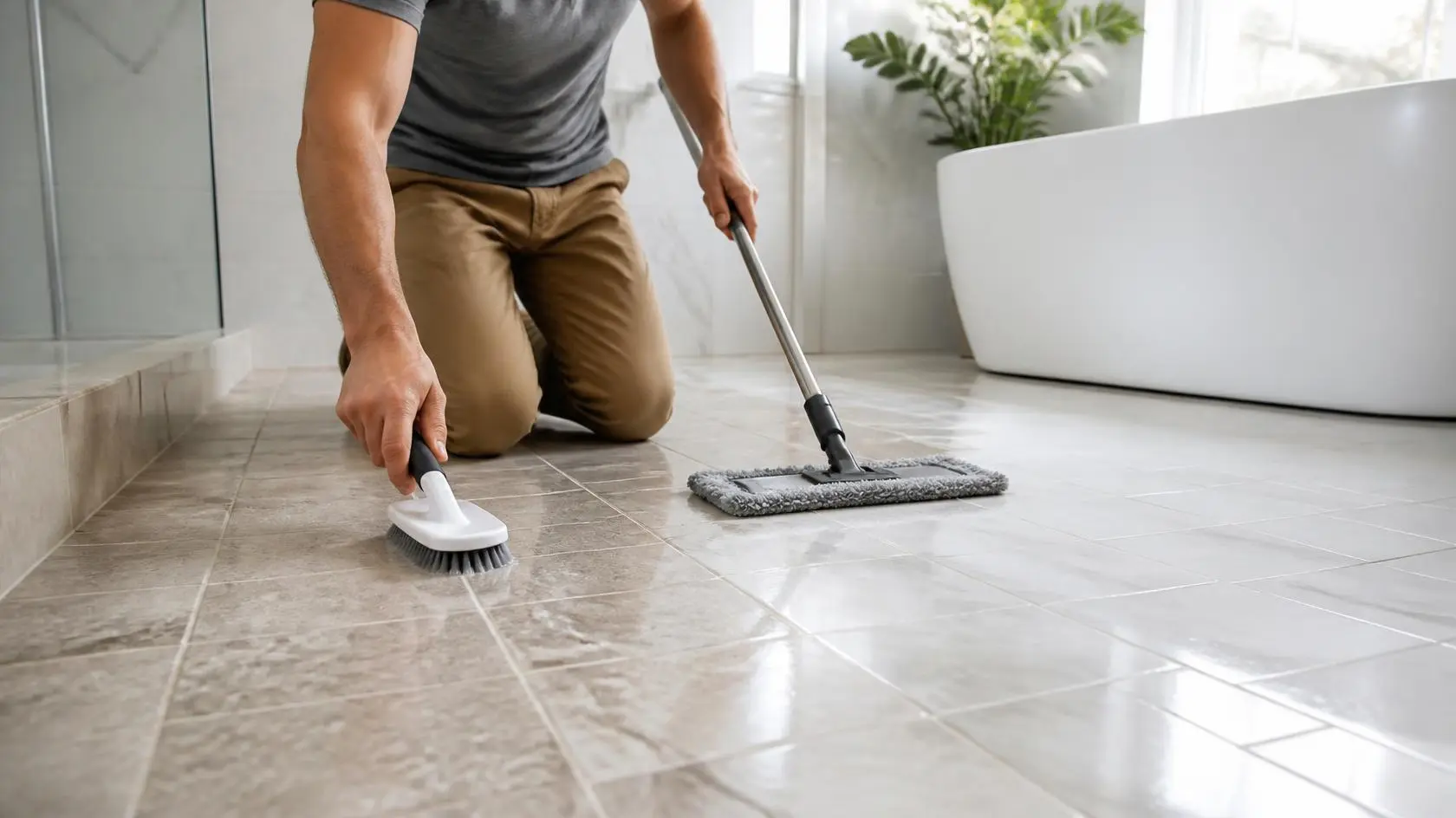
Floor tiles face foot traffic, dropped products, and pooling water near the toilet and bath. They typically need more mechanical scrubbing than wall tiles. Use a floor scrub brush rather than a toothbrush to cover more area efficiently. After cleaning, always dry the floor thoroughly to prevent slipping and mold growth in floor grout.
Quick Maintenance Tips to Keep Tiles Clean Longer
Once you have done the hard work of learning how to clean bathroom tiles, protect your investment with these daily micro-habits:
- Squeegee the walls after every shower this removes 70–80% of the moisture that enables mold
- Leave the exhaust fan running for at least 15 minutes post-shower
- Wipe tile surfaces with a dry cloth once a week
- Spray diluted white vinegar on tiles once a week and let air-dry for ongoing mild maintenance
- Seal your grout annually for permanent stain protection
For further reading on cleaning product selection, the American Cleaning Institute at cleaninginstitute.org provides up-to-date, research-backed guidance on household hygiene best practices.
Conclusion
Learning how to clean bathroom tiles is one of the most rewarding home care skills you can develop because the results are immediate, visible, and lasting. From a simple baking soda paste to a full deep-clean grout rescue, every method in this guide is actionable today.
Start small: grab a spray bottle, dilute some white vinegar, and give your shower wall tiles a quick wipe tonight. Then build from there. The more consistently you apply these methods, the less time and effort each session takes.
Frequently Asked Questions (FAQ)
What is the best homemade cleaner for bathroom tiles?
A mixture of baking soda, hydrogen peroxide, and dish soap can help clean many ceramic or porcelain tile surfaces and grout. Before using any homemade cleaner, test it on a small inconspicuous area and follow the tile and grout manufacturer’s care instructions.
How often should I deep clean my bathroom tile grout?
For most households, a monthly deep clean is a practical routine. Bathrooms with heavier use may need cleaning more frequently. Sealing appropriate grout can also help reduce staining and make routine cleaning easier.
Can I use bleach to clean bathroom tiles?
Bleach can disinfect certain nonporous surfaces and help address mold or mildew, but it should be used carefully and according to the product label. Never mix bleach with vinegar, ammonia, or other cleaning products, as dangerous gases can form. Always provide good ventilation and use appropriate protective equipment.
How do I remove black mold from bathroom tile grout?
For small areas, use a bathroom product specifically labeled for mold and mildew and follow its directions. Scrub the grout with an appropriate brush after the recommended contact time and rinse thoroughly. If mold keeps returning, address the underlying moisture and ventilation problem. Extensive or persistent mold may require professional assessment.
Is it safe to use vinegar on all bathroom tiles?
No. Vinegar can be suitable for some ceramic and porcelain tiles, but its acidity can damage natural stone such as marble, slate, and travertine. For natural stone, use a pH-neutral cleaner recommended for that material. Always check the manufacturer’s care instructions before applying vinegar or another acidic cleaner.