I still remember the first time I pressed the self-clean button. I stood in my kitchen with my arms crossed, waiting for a miracle. Three hours later my smoke alarm was screaming, every window was open, and the oven looked only slightly better than before. That day taught me something simple: knowing how to clean a self cleaning oven is not about pressing one button. It is about preparation, timing, and a healthy respect for temperatures that can reach 1,000 degrees Fahrenheit.
If you have ever wondered how to clean a self cleaning oven without smoke, strange smells, or a surprise repair bill, this guide is for you. You will get a clear step-by-step method, honest safety advice, and a few habits that make the whole job easier. Think of it as the advice I wish someone had handed me before that smoky afternoon.
Quick Answer: Six Steps for Busy Homeowners
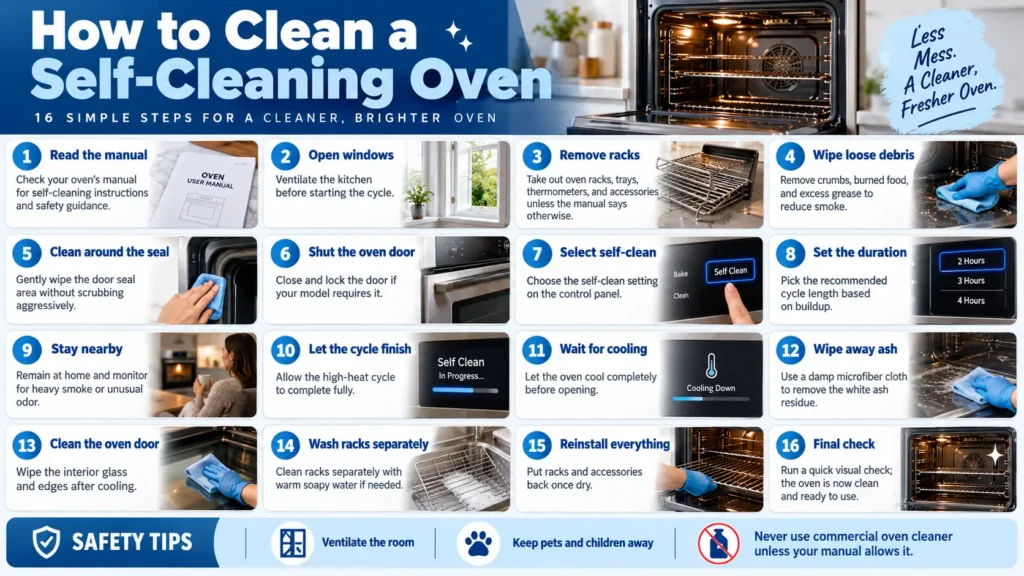
Short on time? Here is how to clean a self cleaning oven in six steps:
- Remove the racks, pans, foil, and loose food.
- Wipe up large spills and grease by hand.
- Open the windows and switch on the vent hood.
- Lock the door and start the self-clean cycle.
- Let the oven cool until the door unlocks on its own.
- Wipe the leftover ash away with a damp cloth.
That is the entire routine for how to clean a self cleaning oven. The rest of this guide explains why each step matters, so you can skip the smoke and protect your oven for years.
What Actually Happens During a Self-Clean Cycle
Before you master how to clean a self cleaning oven, it helps to know what the appliance is really doing. High-heat models lock the door and climb to roughly 800 to 1,000 degrees Fahrenheit, which turns food residue and grease into a fine ash. Steam-clean models are gentler. They stay near 250 degrees Fahrenheit and use steam to loosen light messes, so the door usually stays unlocked.
| Feature | High-Heat Cycle | Steam Clean Cycle |
|---|---|---|
| Typical temperature | 800 to 1,000°F | About 250°F |
| Door lock | Yes, automatic | Usually no |
| Typical run time | 2 to 6 hours, depending on model | Much shorter than high-heat |
| Best for | Heavy, baked-on grime | Light spills and daily buildup |
| Smoke and odor | Moderate to strong | Minimal |
How Do You Know Which Type You Own?
Look at the control panel or open your manual. A “self-clean” setting with a locking door usually signals a high-heat model, while a “steam clean” setting points to the gentler type. Your manual is always the final word on timing, rack removal, and how often to run the cycle.
Why Safety Comes First Every Single Time
Here is a number that changed how I treat my oven. According to the NFPA, cooking caused an average of 158,400 reported home structure fires per year between 2017 and 2021, roughly 44 percent of all reported home fires in the United States. Unattended cooking was the leading contributing factor. Self-cleaning feels like a hands-off chore, but it is still a very hot oven running for hours.
Fire departments echo the same message. Clarington Fire Chief Gord Weir warns, “Never leave your oven unattended when you set the self-cleaning option.” He notes that a cycle usually takes three to four hours. The La Crosse Fire Department adds that if flames ever appear, you should never open the door, because fresh oxygen feeds the fire. Turn the oven off and call 911 instead.
Anyone who researches how to clean a self cleaning oven safely will see the same advice again and again: stay home, stay alert, and keep the door closed.
Smoke, Fumes, and Pets in the House
The cycle can create pungent fumes that irritate eyes and lungs, and pets are especially sensitive. Move birds and small animals to a well-ventilated room far from the kitchen, or outside if the weather allows. The front of the oven also becomes extremely hot, so keep children and pets away from it until everything cools.
My personal rule is simple. If I cannot be home and awake for the whole cycle, I do not start it. When I plan how to clean a self cleaning oven now, I pick a quiet weekend morning instead of a rushed weeknight.
Step-by-Step: How to Clean a Self Cleaning Oven
Ready? Follow these steps in order for the cleanest, safest result.
Step One: Empty and Prep the Oven
Take out the racks unless your manual says they can stay. Remove pans, thermometers, and every scrap of foil, since foil can melt onto the oven lining and warp it. Then pick out large crumbs and charred chunks by hand. Big pieces of food and pooled grease are what usually cause flare-ups. This prep step is the heart of how to clean a self cleaning oven without drama.
Step Two: Wipe Up Spills Before You Lock
Use a damp cloth or a baking soda paste on greasy puddles and sugary drips. Skip harsh commercial sprays inside a self-cleaning oven, because most manufacturers advise against them and the fumes get worse once the heat climbs.
Step Three: Ventilate the Kitchen Properly
Open at least two windows, turn on the range hood, and close the door between the kitchen and the rest of the house if you can. Good airflow keeps smell and smoke from spreading, and it is a big part of how to clean a self cleaning oven without headaches.
Step Four: Lock the Door and Start the Cycle
Select the self-clean setting, choose the shortest time that suits your mess level, and let the door lock automatically. Light soil often needs about two hours, while heavy buildup may need three to four. Stay close, check on the oven now and then, and keep your phone handy.
Step Five: Let the Oven Cool Completely
Do not force the door. Once the cycle ends, the oven needs a couple of hours to cool, and the lock releases only when the temperature drops to a safe level. Patience here protects your hands and your oven.
Step Six: Wipe Away the Ash
When everything is cool, wipe the interior with a damp cloth. The ash is usually a pale, powdery film that lifts easily. Return the racks, and you are done. This final wipe is the satisfying finish to how to clean a self cleaning oven properly.
How Often Should You Run the Cycle?
Less often than you think. The self-clean cycle is tough on parts, so repair pros often advise running it sparingly, and some experts suggest no more than once a year for high-heat models. Pair it with a quick manual wipe each month to keep buildup small. Frequency is the other half of how to clean a self cleaning oven wisely.
Common Mistakes That Damage Your Oven
- Leaving racks inside when the manual says to remove them.
- Skipping the pre-wipe, which invites smoke and flare-ups.
- Running the longest cycle every time, when a shorter one would do.
- Ignoring the door seal, since a failing gasket lets heat escape.
- Forgetting about nearby cabinets, which can suffer heat damage during long cycles.
Extreme heat can also blow a fuse or burn out the electronic control panel, according to home repair specialists. That is an expensive lesson, and it is one more reason to treat how to clean a self cleaning oven as a careful process rather than a push-button chore.
Signs It Is Time to Call a Pro
Even when you know how to clean a self cleaning oven perfectly, some problems need a technician. Call one if the door will not unlock after cooling, an error code keeps returning, the control panel goes dark, or a burning smell lingers after the cycle. If your oven is old and the cabinets around it show heat damage, a kitchen refresh may beat another repair. A trusted resource like Homes Remodeler can help you weigh repair against replacement.
Natural Ways to Clean Between Cycles
You do not always need 900 degrees to get results. Some of my favorite shortcuts for how to clean a self cleaning oven between cycles cost only a few dollars and smell far better.
The Baking Soda Method I Swear By
- Mix half a cup of baking soda with two to three tablespoons of water to form a spreadable paste.
- Spread it over the cool interior, avoiding the heating elements and any vents.
- Let it sit overnight, or for at least eight hours.
- Wipe out the paste with a damp cloth, then spritz any leftover film with white vinegar and wipe again.
It is slower than pressing a button, but it works, and it keeps harsh fumes out of your home. When friends ask how to clean a self cleaning oven without chemicals, this is the answer I give.
Cleaning Oven Racks and Door Glass
Racks clean best in a tub of hot water and dish soap, left to soak for a few hours. For the door glass, a baking soda paste and a soft cloth remove haze without scratching. Both tasks belong in any plan for how to clean a self cleaning oven from top to bottom.
Smart Habits That Keep Your Oven Cleaner
The cheapest way to handle a dirty oven is to keep it from getting dirty. A few small habits go a long way:
- Place a sheet pan on the rack below pies, casseroles, and anything that bubbles.
- Wipe spills once the oven is cool, before they bake on.
- Cover dishes with a lid when you can.
- Give the interior a quick monthly wipe so heavy buildup never forms.
Honestly, the best answer to how to clean a self cleaning oven is to need the cycle less often.
Final Thoughts on a Cleaner Kitchen
The self-clean button is a wonderful tool, but it works best with a little help from you. Prep the oven, ventilate the room, stay home, and let it cool fully. Do that, and how to clean a self cleaning oven stops being a stressful question and becomes a simple routine. I have gone from smoky afternoons to a quiet, two-hour cycle and a ten-minute wipe, and you can too.
Frequently Asked Questions About Oven Cleaning
How Long Does a Self-Cleaning Oven Cycle Take?
Most high-heat cycles run between two and six hours, depending on the model and how dirty the oven is. Check your manual for the exact time, because the best timing for how to clean a self cleaning oven varies by brand.
Is It Safe to Leave Home During the Cycle?
No. Fire departments consistently advise staying home for the full cycle, which often lasts three to four hours. Being nearby lets you respond quickly if smoke or flames appear. Safety is non-negotiable in how to clean a self cleaning oven.
Can I Use Oven Cleaner in a Self Cleaning Oven?
Most manufacturers advise against it. Commercial sprays can damage the interior coating and create harsh fumes when heated. A baking soda paste is a safer choice for spot cleaning, and it fits right into how to clean a self cleaning oven the gentle way.
What Is the White Ash Left After Cleaning?
It is the carbonized remains of food and grease that burned off during the cycle. Once the oven is cool, a damp cloth wipes it away in seconds. Seeing that ash means the cycle did its job, which is the goal of how to clean a self cleaning oven.
How Do I Start If My Oven Is Very Dirty?
Begin with a manual pass: remove chunks, scrub heavy grease with baking soda paste, and wipe the door glass. Then run a shorter cycle and repeat only if needed. Following this order is the most reliable version of how to clean a self cleaning oven for heavy messes. Ready to give your oven the care it deserves?