
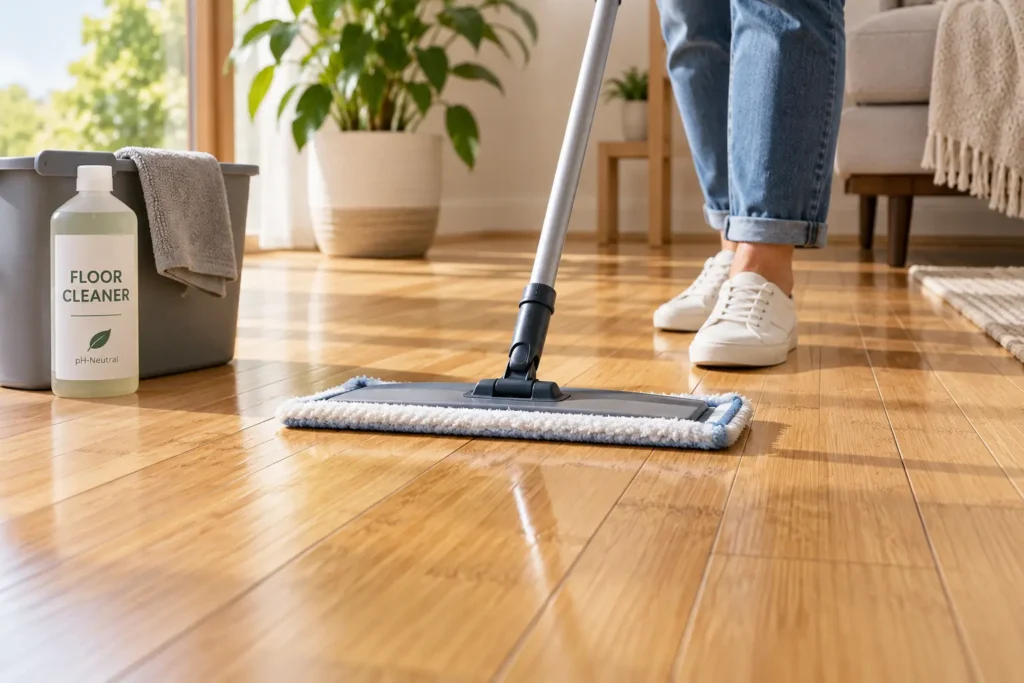
Bamboo flooring has become one of the most talked-about choices in modern home design and if you have installed it recently, you already know why. It looks stunning, it is eco-friendly, and it holds up remarkably well under everyday foot traffic. But there is one thing many new bamboo floor owners figure out the hard way: knowing how to clean bamboo flooring correctly is just as important as choosing the right product in the first place.
I learned this lesson myself. After installing strand-woven bamboo in my living room, I made the classic mistake of mopping it with a grocery store floor spray and a sopping wet mop. Within a month, I noticed faint discoloration along the board edges and a cloudiness in the finish that no amount of scrubbing seemed to fix. That is what poor cleaning technique does to bamboo and it is almost entirely avoidable.
This 2026 guide gives you everything: a daily routine, a weekly plan, deep cleaning steps, a product comparison table, and the stain-removal tactics that actually work. Whether your floors are solid, engineered, or strand-woven bamboo, this is the only resource you need.
Why Bamboo Flooring Is Booming in 2026
Before diving into technique, it helps to understand why so many homeowners are making this choice and why getting the maintenance right matters more than ever.
According to Precedence Research, the global bamboo flooring market was valued at USD 1.48 billion in 2025 and is expected to reach USD 1.53 billion in 2026, eventually climbing to USD 2.09 billion by 2035 at a CAGR of 3.51%. The Business Research Company’s 2026 Global Bamboo Market Report puts the broader bamboo industry at $85.66 billion in 2026, growing at a CAGR of 7.9% driven by rising demand for renewable, eco-conscious materials.
The residential sector remains the dominant driver, accounting for roughly 60% of bamboo flooring demand globally, while commercial adoption continues to expand in offices, hospitality, and retail environments. A key 2026 trend: the indoor decking bamboo segment has registered a staggering 136.6% demand growth according to Ali baba trade data signaling that buyers are increasingly using bamboo beyond traditional flooring applications.
In short, bamboo floors are everywhere right now. And every single one of them needs proper care to stay looking the way it did on day one.
Understanding What You Are Actually Cleaning
This is something nobody tells you upfront: when you clean bamboo flooring, you are not cleaning the bamboo itself you are cleaning the finish on top of it. Most bamboo floors are coated with a polyurethane or aluminum oxide topcoat that provides the sheen and scratch resistance. That finish is what harsh cleaners, acidic solutions, and excessive moisture attack.
Once you damage the finish, the underlying bamboo becomes exposed and vulnerable to moisture absorption, staining, and warping. This is why cleaning bamboo flooring requires a completely different mindset than cleaning tile or vinyl. You are maintaining a protective layer, not just scrubbing a hard surface.
The Complete Toolkit for Cleaning Bamboo Flooring
Knowing how to clean bamboo flooring starts with having the right tools. The wrong equipment can do as much damage as the wrong product.
What you need:
- Soft-bristle broom or microfiber dust mop
- Vacuum cleaner with a hard-floor setting and soft floor attachment
- Well-wrung microfiber flat mop
- pH-neutral bamboo or hardwood floor cleaner (Bona Pro is widely recommended by dealers including Cali Bamboo)
- Fine-mist spray bottle for controlled product application
- Soft microfiber cloths for spot treatment and spill response
- Felt furniture pads for all chair and table legs
What you must avoid:
- Steam mops — they cause warping and swelling
- Wet mops — excessive moisture is bamboo’s primary enemy
- White vinegar — despite popular advice, it is too acidic and slowly etches the finish
- Oil-based soaps or wax-based polishes — leave sticky residue that attracts dirt
- Bleach or ammonia-based cleaners — cause discoloration
- Rotating brush vacuum heads — scratch and dent the surface
How to Clean Bamboo Flooring Every Day
The single biggest thing you can do for your bamboo floors costs almost no time at all. Daily dry cleaning removes the fine grit and debris that acts like sandpaper underfoot gradually wearing the finish down every time someone walks across the room.
Sweep or Dust Mop Every Morning
Use a soft-bristle broom or a microfiber dust mop daily in high-traffic areas. A microfiber mop is actually preferable to a broom because it captures fine particles instead of pushing them around. Always sweep in the direction of the grain this looks better and prevents debris from catching in the seams.
If you have pets, this step is non-negotiable. Pet hair and tracked-in grit are two of the fastest ways to dull bamboo flooring, and they accumulate invisibly until you start noticing the scratches.
Handle Spills the Moment They Happen
Bamboo absorbs moisture faster than most natural materials. The moment a spill occurs water, coffee, juice, cooking oil, anything blot it with a dry microfiber cloth immediately. Do not wipe or spread it. Press, absorb, and lift.
If the liquid has spread, work inward from the edges to avoid pushing it into the board seams. Follow up with a barely damp cloth to remove any residue, then let the area air-dry for a few minutes before walking on it again.
How to Clean Bamboo Flooring on a Weekly Basis
Once a week, add a damp mopping session to your routine. This is where most homeowners make the errors that cause long-term damage so follow these steps carefully.
Step 1: Sweep or Vacuum First
Never mop over loose debris. Start with a thorough sweep or vacuum using a hard-floor attachment. This ensures you are not grinding grit into the floor surface during the mopping step.
Step 2: Prepare Your Cleaning Solution
Mix a small amount of pH-neutral bamboo or hardwood floor cleaner with water, following the dilution ratio on the product label. Put the solution in a fine-mist spray bottle rather than a bucket this gives you precise control over how much moisture reaches your floors.
Never spray cleaner directly onto the floor surface in large quantities. Spray it onto the mop pad itself, or apply a very light mist to a small section at a time.
Step 3: Wring the Mop Until It Is Nearly Dry
This is the step that separates people who have great bamboo floors from people who have warped ones. Your microfiber mop should feel barely damp against your palm. If any moisture drips off it, wring it again. Excess water seeps into the seams between planks and causes expansion, cupping, and buckling over time.
Step 4: Mop in the Direction of the Grain
Work in small sections, mopping with the grain rather than against it. Rinse and wring the mop pad frequently so you are not redistributing dirt across the floor. Pay extra attention to high-traffic areas hallways, kitchen zones near the sink, and spots in front of sofas.
Step 5: Allow the Floor to Air-Dry
Do not dry the floor manually with a towel or cloth this creates swirl marks. Let it air-dry naturally, which should take no more than 10 to 15 minutes with adequate ventilation. Open a window or run a ceiling fan on low speed to speed up the process if needed.
Deep Cleaning Bamboo Flooring Every 2 to 3 Months
Even with a solid daily and weekly routine, bamboo floors benefit from a deeper clean a few times a year. This is especially important in homes with heavy foot traffic, indoor pets, or kitchens with high cooking activity.
How to Deep Clean Without Causing Damage
- Begin with a thorough sweep and vacuum to remove all surface debris.
- Mix a slightly more concentrated solution of your pH-neutral cleaner per label instructions.
- Using a well-wrung microfiber mop, work the solution into scuffed or stained areas using gentle circular motions keep movements slow and controlled.
- Immediately wipe each section with a clean, barely damp microfiber cloth.
- Finish with a dry microfiber pass to remove any remaining moisture.
For stubborn scuffs, heel marks, or light surface stains, a small amount of rubbing alcohol or methylated spirits applied to a soft cloth works effectively without harming the finish. Always test in a hidden corner first.
As flooring care specialists at Plantation Bamboo advise, using undiluted methylated spirits on a cloth is safe for removing red wine, coffee, and other stubborn spots the key is applying it to the cloth, never directly to the floor.
Product Safety Guide: What Works and What Does Not
Choosing the right cleaner is central to how to clean bamboo flooring safely. Here is a side-by-side breakdown of the most common options:
| Product | Safe for Bamboo? | Notes |
|---|---|---|
| pH-neutral bamboo floor cleaner | Yes | Best choice for all bamboo types |
| Bona Pro Hardwood Floor Cleaner | Yes | Recommended by major bamboo dealers |
| Diluted mild dish soap | Use sparingly | Rinse thoroughly, avoid buildup |
| White vinegar | No | Too acidic, etches and dulls the finish |
| Bleach or ammonia cleaners | No | Causes discoloration and finish damage |
| Oil-based soaps | No | Leaves sticky residue, attracts dirt |
| Wax-based polishes | No | Creates hazy buildup over time |
| Steam mop | No | Causes warping, swelling, and cracking |
| Multi-surface spray | Check label | Only if confirmed pH-neutral |
According to flooring expert advice published on Homestars in mid-2026, dark bamboo floors in particular benefit from microfiber damp-buffing over wet mopping the deep color acts like a mirror and amplifies any streaks or residue left by the wrong products.
Stain Removal Guide for Bamboo Flooring
Even the most careful homeowners deal with stains. Knowing how to clean bamboo flooring under pressure without panicking and reaching for the wrong product makes all the difference.
Red Wine or Coffee
Blot immediately to absorb as much liquid as possible. Apply a small amount of pH-neutral cleaner to a microfiber cloth and gently dab the stain, working from the outside in. Rinse with a barely damp cloth and let it air-dry.
Grease or Cooking Oil
Dampen a soft microfiber cloth with warm water and a drop of mild dish soap. Dab gently do not scrub then wipe away with a clean damp cloth. Dry the area immediately.
Scuffs and Heel Marks
Rub lightly with a clean, dry microfiber cloth using circular motions. For persistent marks, a tiny amount of rubbing alcohol on a soft cloth removes them cleanly without affecting the finish.
Pet Accidents
Act within seconds if possible. Blot all liquid thoroughly, then clean the area with a pet-safe, pH-neutral floor cleaner on a barely damp cloth. Ensure the area dries completely urine that soaks into seams can cause lasting odor and discoloration.
Long-Term Protection Tips That Most Guides Skip
Learning how to clean bamboo flooring is only one side of the equation. These protection habits keep your floors pristine between cleaning sessions.
Place Mats at Every Entry Point
A significant portion of bamboo floor damage comes from grit, small stones, and sand tracked in from outside. A quality door mat at every exterior entrance and a transition rug in high-traffic hallways intercepts most of this debris before it ever reaches your floors.
Add Felt Pads to Every Piece of Furniture
Dragging chairs or tables across bamboo without felt pads creates deep scratches that no amount of cleaning can fix. Furniture felt pads are cheap, easy to apply, and absolutely essential. For more expert home maintenance and renovation guidance, check out Homes Remodeler a trusted resource for practical homeowner advice.
Monitor Indoor Humidity Year-Round
Bamboo responds to humidity the same way solid hardwood does. The ideal indoor humidity range for bamboo flooring is between 40% and 60%. Below this range, planks can shrink and gap; above it, they swell and buckle. A basic digital hygrometer costs under $15 and takes the guesswork out of seasonal maintenance.
Use Rugs in High-Traffic Zones
Area rugs in living rooms, hallways, and dining areas absorb the bulk of daily wear protecting the bamboo underneath. When choosing rugs, avoid latex or rubber backing, which can trap moisture and discolor the floor surface beneath.
Protect From UV Exposure
Prolonged sunlight causes fading and color shift in bamboo, especially in rooms with south- or west-facing windows. UV-filtering window film or quality blinds are a simple investment that preserves the floor’s original tone for years.
The Biggest Bamboo Cleaning Mistakes to Avoid in 2026
Even experienced homeowners make these errors. Knowing how to clean bamboo flooring means knowing what not to do just as much as what to do.
- Using a wet mop — the most common and most damaging mistake by far
- Steam mopping — no exceptions, regardless of what any steam mop advertisement claims
- Following the vinegar advice — widely shared online but genuinely harmful to bamboo finishes
- Skipping daily sweeping — debris accumulation accelerates surface wear faster than most people expect
- Spraying cleaner directly on the floor — always spray onto the mop pad
- Using multi-surface cleaners without checking pH — many are alkaline or acidic, both of which damage bamboo finishes
- Walking on a damp floor immediately — wait for full air-drying to avoid transferring moisture deeper into the boards
Frequently Asked Questions
Q1: How often should I clean bamboo flooring in 2026?
Sweep or dust mop daily in high-traffic areas, damp mop once a week with a well-wrung microfiber mop and a pH-neutral cleaner, and deep clean every two to three months. The more foot traffic your floors see, the more consistent your daily routine needs to be.
Q2: Can I use a steam mop on bamboo flooring?
No. Steam mops generate heat and moisture that can penetrate bamboo flooring, potentially causing swelling, warping, and permanent damage. This applies to solid bamboo, engineered bamboo, and strand-woven bamboo floors. Always follow the flooring manufacturer’s cleaning instructions.
Q3: What is the best cleaner for bamboo flooring in 2026?
A pH-neutral cleaner specifically formulated for hardwood or bamboo flooring is generally a suitable choice. Bona Hardwood Floor Cleaner is one option, provided it is compatible with your floor’s finish and manufacturer guidelines. Avoid cleaners containing vinegar, bleach, ammonia, wax, or oil-based ingredients unless expressly approved by the manufacturer.
Q4: Is it safe to vacuum bamboo floors?
Yes, you can safely vacuum bamboo flooring using a vacuum designed for hard surfaces. Select hard-floor mode and use a soft floor attachment to prevent scratches. Avoid rotating brush heads or beater bars that may damage the finish, especially on softer solid bamboo varieties.
Q5: How do I keep bamboo flooring shiny without wax or polish?
The best way to maintain the natural shine of bamboo flooring is through consistent cleaning with a microfiber mop and a manufacturer-approved, pH-neutral cleaner. Avoid wax, silicone, and soap-based products unless specifically recommended for your floor’s finish, as they can leave residue that dulls its appearance. Regular dust removal and careful damp mopping help keep bamboo floors looking clean and bright.


